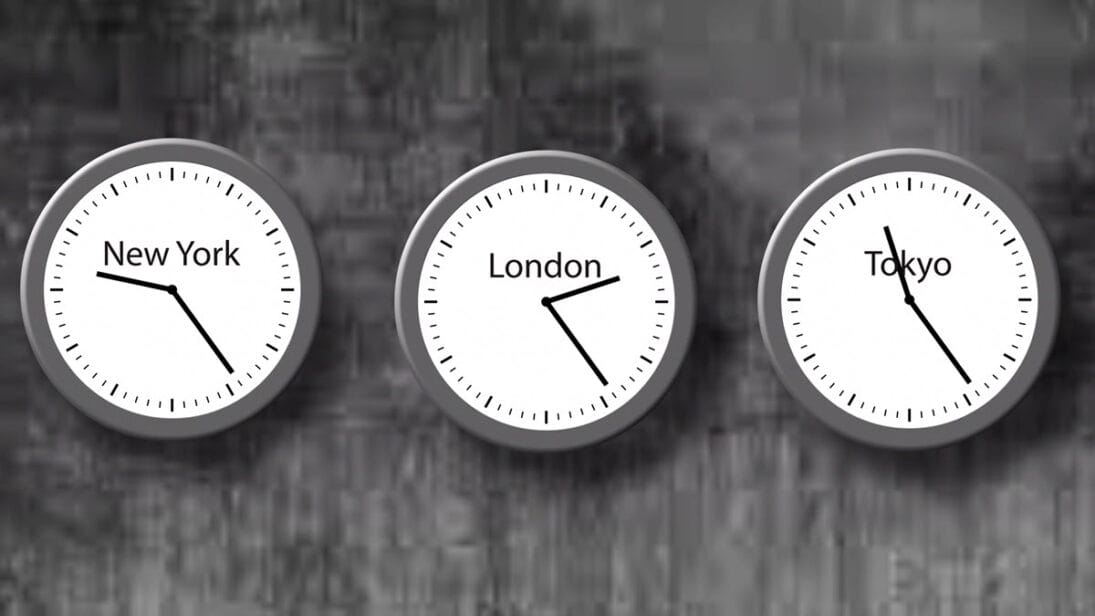
See the current time worldwide – updated in real time
See the exact local time in all countries and in more than 150,000 cities worldwide. Automatically updated in real time with time zones, time differences, and daylight saving time. Browse by continent or search directly for a country or city.
Global time can be complex, especially when different countries use different time zones, daylight saving time, and special rules. This service brings everything together in one place, making it easy to view local time, time differences, dates, and time zones — without having to calculate anything yourself.
The system automatically accounts for regional differences, transitions between daylight saving and standard time, and exceptions used by only a few countries. This makes it easier to plan travel, online meetings, phone calls, and cross-border work.
The Earth rotates on its axis, which is why it is not day and night at the same time all over the world. To align the day with local solar time, the globe is divided into 24 primary time zones, each differing by one hour. However, some countries do not strictly follow international boundaries, resulting in special time zones with half-hour or quarter-hour offsets.
What are UTC, GMT, and local time?
UTC is the international standard time on which all time zones are based. GMT is an older time reference that is still commonly used in everyday language. Local time depends on the specific time zone of the country or region you are in, as well as whether daylight saving time is observed.
Daylight saving time and standard time worldwide
Many countries in Europe and North America use daylight saving time to make better use of daylight, but large parts of the world do not. This means that the time difference between two countries can change depending on the season. Some countries have also abolished daylight saving time entirely.
Time difference between countries – how it is calculated
A time difference is the difference in hours between two time zones. When you want to know the time in another country, its time zone (with or without daylight saving time) is compared to your local time. This is especially important for international meetings, work tasks, gaming, livestreaming, and travel.
Europe and the United States
The United States has multiple time zones: Eastern, Central, Mountain, Pacific, Alaska, and Hawaii. Depending on the region and the time of year, Europe can be anywhere from 6 to 11 hours ahead of the United States.
Europe and Thailand
Thailand does not observe daylight saving time, which keeps the time difference relatively stable throughout the year. It is typically 5 or 6 hours, depending on whether daylight saving time is in effect locally.
Europe and Australia
Australia has several time zones and different daylight saving rules depending on the state. As a result, the time difference can vary significantly and may even differ within the country at the same time.
Popular cities and countries on the world clock
When using a world clock, you will typically find the most searched destinations such as New York, London, Tokyo, and Sydney. These cities represent key time zones that help coordinate international activities across continents.
Major cities with different local times
New York is located in the Eastern Time Zone (UTC-5) and is a central hub for global financial markets. When it is noon in New York, it is already 6:00 PM in London and 3:00 AM the next day in Tokyo.
London operates on GMT/UTC+0 and serves as a reference point for many time zones worldwide. Sydney is 11 hours ahead of London during standard time, which makes coordination between the two cities challenging.
Tokyo (UTC+9) begins the workday while it is still night in Europe and afternoon on the previous day on the U.S. West Coast. Dubai (UTC+4) sits between eastern and western time zones, making it a convenient meeting point.
Time in Europe, Asia, the Americas, and Africa
Europe spans several time zones, from UTC+0 in Portugal to UTC+3 in parts of Russia. Central European Time (CET, UTC+1) covers most Western European countries, including Germany, France, and Italy.
Asia has the widest range of time zones, with India at UTC+5:30 and China using a single time zone (UTC+8) despite its size. The Americas stretch from UTC-8 on the West Coast to UTC-3 in Argentina. The United States alone has four main time zones.
Africa primarily operates between UTC+0 and UTC+3, with Egypt and South Africa serving as important reference points.
How to find local times
You can use online world clocks to search for specific cities or countries directly via the search field. Most world clocks automatically display the time difference between your current location and the selected destination.
Add multiple cities to your personal world clock to compare times simultaneously. This is especially useful when planning meetings or phone calls with participants in different time zones.
Remember to check whether the destination observes daylight saving time, as this affects the time difference during certain periods of the year. Many world clocks automatically adjust for daylight saving time changes, ensuring you always see the correct local time.
Find local time worldwide by continent, country, and city
The world is divided into six continents, each offering a vast variety of countries, cultures, and time zones. On this site, you can explore local time worldwide by first selecting a continent and then navigating to countries and cities. Whether you need to coordinate a meeting, plan a trip, or are simply curious, you can quickly find the exact time information you need.
Africa
Africa spans several time zones and includes both large metropolitan areas and smaller communities. Here you can check the time in countries such as Egypt, South Africa, Kenya, Nigeria, and Morocco. Popular cities include Cairo, Johannesburg, Nairobi, Lagos, and Casablanca.
Asia
Asia is the largest continent in the world and has some of the greatest time differences. It includes countries such as Japan, Thailand, India, China, Indonesia, Singapore, and Saudi Arabia. Many users also look up the time in cities like Tokyo, Bangkok, New Delhi, Beijing, Jakarta, and Dubai.
Europe
Europe has a dense network of countries and cities, making time zones especially relevant for travel and cross-border collaboration. You can see the time in countries such as France, Germany, Spain, Italy, Norway, Sweden, and the United Kingdom. Cities like Paris, Berlin, Madrid, Rome, Oslo, Stockholm, and London are among the most searched.
North America
North America includes everything from major cities to small local communities across very different time zones. Countries include the United States, Canada, and Mexico. Popular cities to look up are New York, Los Angeles, Chicago, Toronto, Vancouver, and Mexico City.
South America
South America features tropical regions, mountain ranges, and vibrant capital cities. Here you can check the time in countries such as Brazil, Argentina, Chile, Peru, and Colombia. Many users also search for cities like Rio de Janeiro, Buenos Aires, Santiago, Lima, and Bogotá.
Oceania
Oceania consists of large countries and small island groups near the International Date Line. Here you can see the time in Australia, New Zealand, Fiji, Papua New Guinea, and Samoa. Among the most popular cities are Sydney, Melbourne, Brisbane, Auckland, Suva, and Apia.
No matter where in the world you are looking for the current time — from busy metropolitan areas to small, remote islands — you can quickly find local time and time differences by navigating to the continent, country, or city of your choice.
Frequently asked questions about time zones and world time
How many time zones are there in the world?
Officially, there are 24 time zones. However, when half-hour and quarter-hour time zones are included, there are more than 30 variations in practice.
Which places are farthest ahead of local time?
Island nations in the Pacific, such as Kiribati and Samoa, can be up to 12–13 hours ahead of local time, depending on the time of year.
Which places are farthest behind in time?
U.S. territories such as Baker Island can be up to 11–12 hours behind local time.
Why do some countries use daylight saving time?
Daylight saving time was introduced to make better use of daylight and save energy. However, many countries have abandoned the practice, as its benefits are considered limited today.
How do you calculate the time difference between two countries?
You compare the difference between their time zones and take daylight saving time into account. With this world clock, you don’t have to calculate anything yourself — the system does it automatically.
What do UTC+1, UTC+2, etc. mean?
They indicate how many hours a time zone is ahead of or behind UTC. For example, Central European Time is UTC+1 in winter and UTC+2 during daylight saving time.
Do all countries switch between daylight saving time and standard time?
No. Large parts of the world — especially Asia, Africa, and Oceania — do not observe daylight saving time.
Which time zone is used in Central Europe?
Most Central European countries use Central European Time (CET) and Central European Summer Time (CEST) during daylight saving time.
Why do some countries have half-hour or quarter-hour time zones?
This is due to historical, geographical, or political decisions. Well-known examples include India (UTC+5:30) and Nepal (UTC+5:45).
Use the world clock when traveling or working internationally
This world clock is a practical tool for anyone who works, travels, or communicates globally. It provides a fast and accurate overview of local time, time zones, and time differences worldwide, allowing you to plan meetings, trips, deadlines, and activities without worrying about time calculations.